Scramble review: an independent analysis of the P2P lending platform

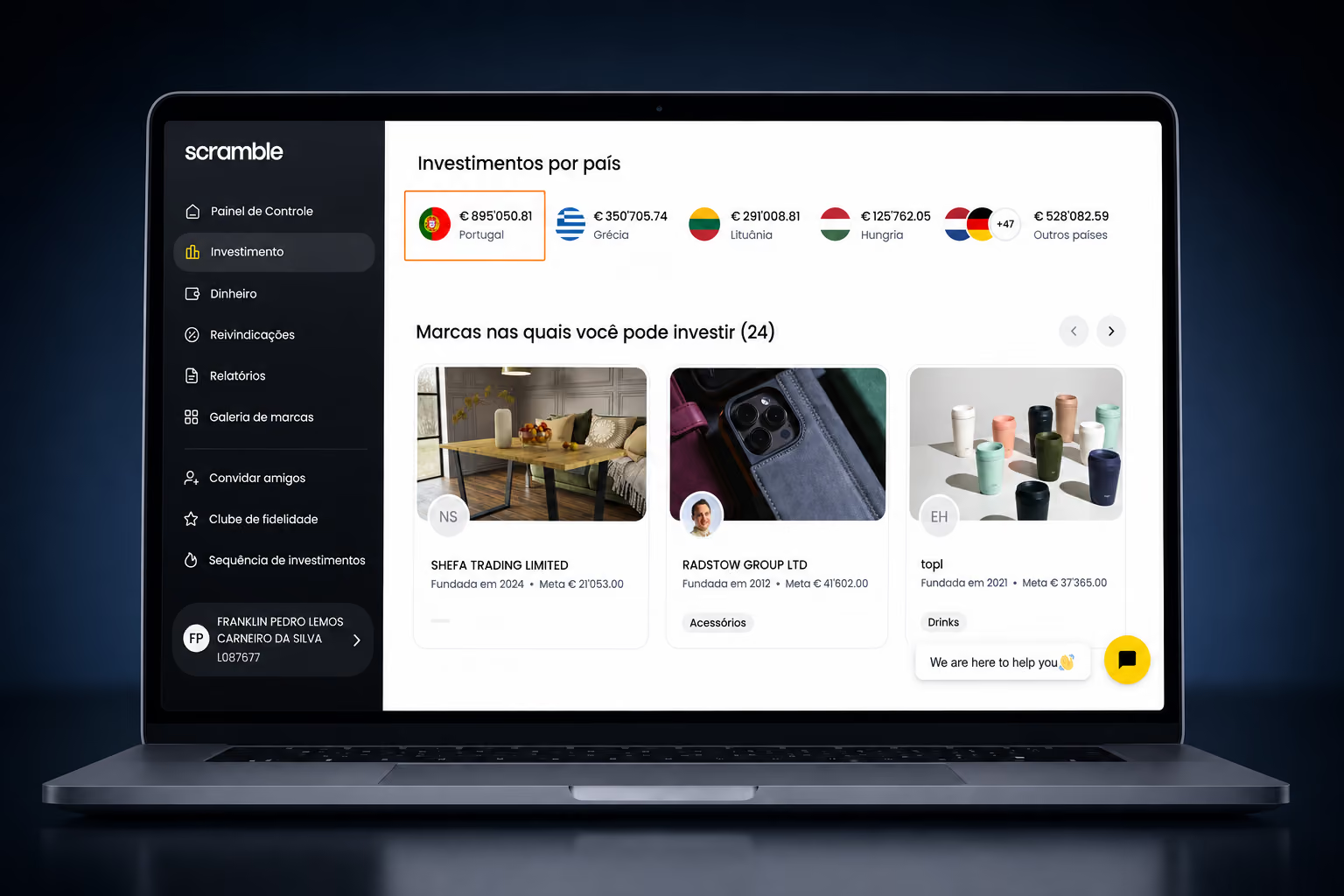



Scramble has become a phenomenon among European retail investors, with finfluencers in several countries promoting the platform. The numbers confirm the enthusiasm - and show how concentrated it is: in the August 2026 round, Portugal was the country that invested the most, with around €895,000 out of a total of €2.19 million, roughly 41% of the entire round, as you can confirm in the rounds history. No other country comes close:
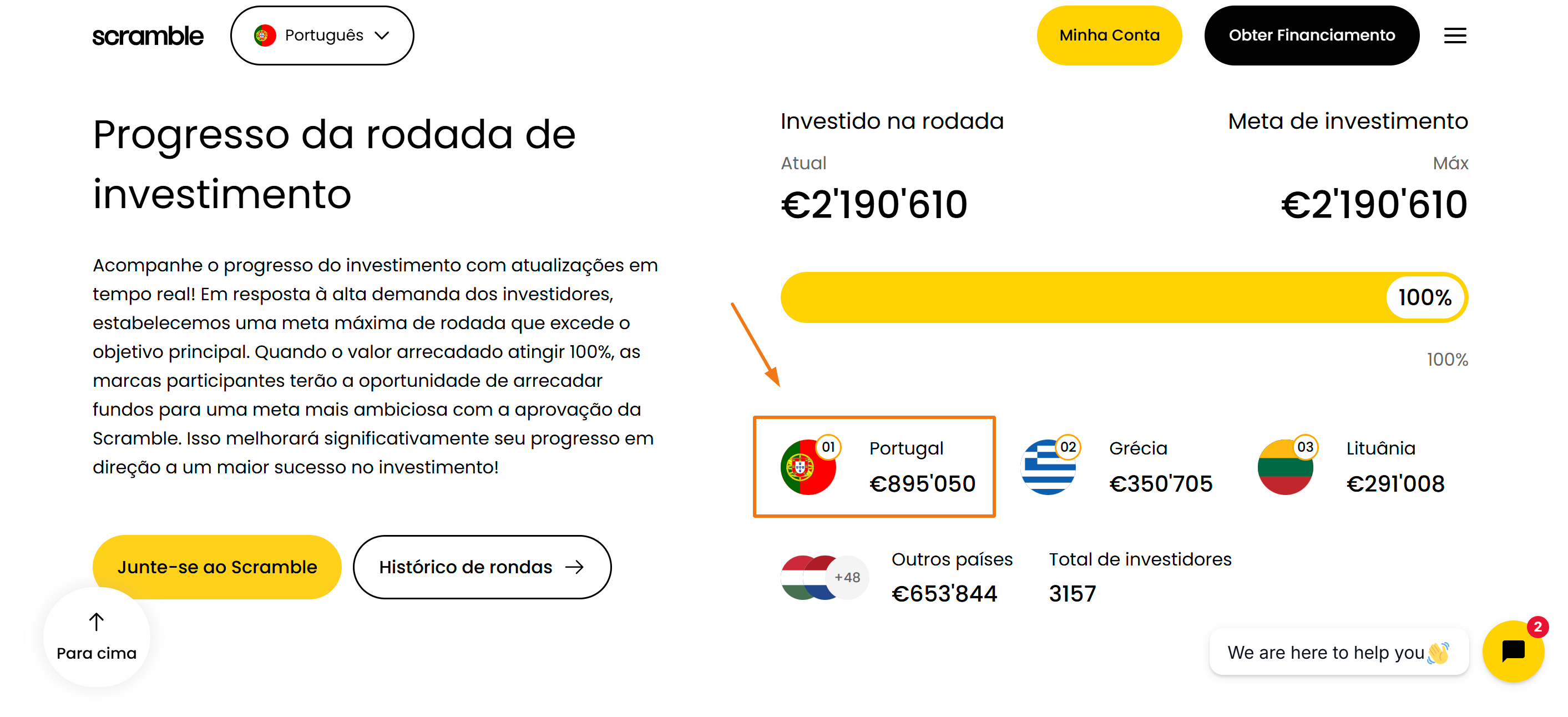
When so many retail investors put money into a platform that "promises" annual returns of 12.4% to 25%, an independent review becomes necessary.
In this article we explain what Scramble is, how it works in practice, who regulates it (spoiler: no one), what the 2025 annual report reveals, what the real risks of this type of investment are, and we also fact-check the main claims made in finfluencer videos.
What is Scramble?
Scramble is an online platform operated by Scramble OÜ, a company registered in Estonia (registry no. 14991448, headquartered in Tallinn), founded in 2020. The parent company is Scramble Limited, based in the United Kingdom.

The concept: retail investors finance the working capital (inventory, packaging, marketing) of small consumer goods brands, mostly British and European, in exchange for a fixed rate. According to the annual reports, in 2024 the platform financed 56 brands from the UK and 2 from the Netherlands, and in 2025 more than 90% of revenues originated in the UK. Contrary to what some videos suggest, the money mostly flows one way: European retail investors come in on the lending side, while the financed brands are overwhelmingly British.
According to the figures published by Scramble itself (not audited by third parties), since June 2022 the platform has run 54 monthly rounds, financed 128 brands and passed €51.2 million invested by more than 12,600 investors, of which €38.3 million (75%) has already been repaid.
How it works in practice
The model is built around monthly rounds, typically between the 1st and the 16th/17th of each month:
- Every month, Scramble aggregates a batch of internally selected brands.
- The investor chooses how much to invest (€10 minimum) and in which group: A or B (more on this below).
- The money is automatically spread across the whole batch, not allocated to an individual company.
- The base term is 6 months. In Group A, you receive monthly repayments of capital and interest. In Group B, only at the end.
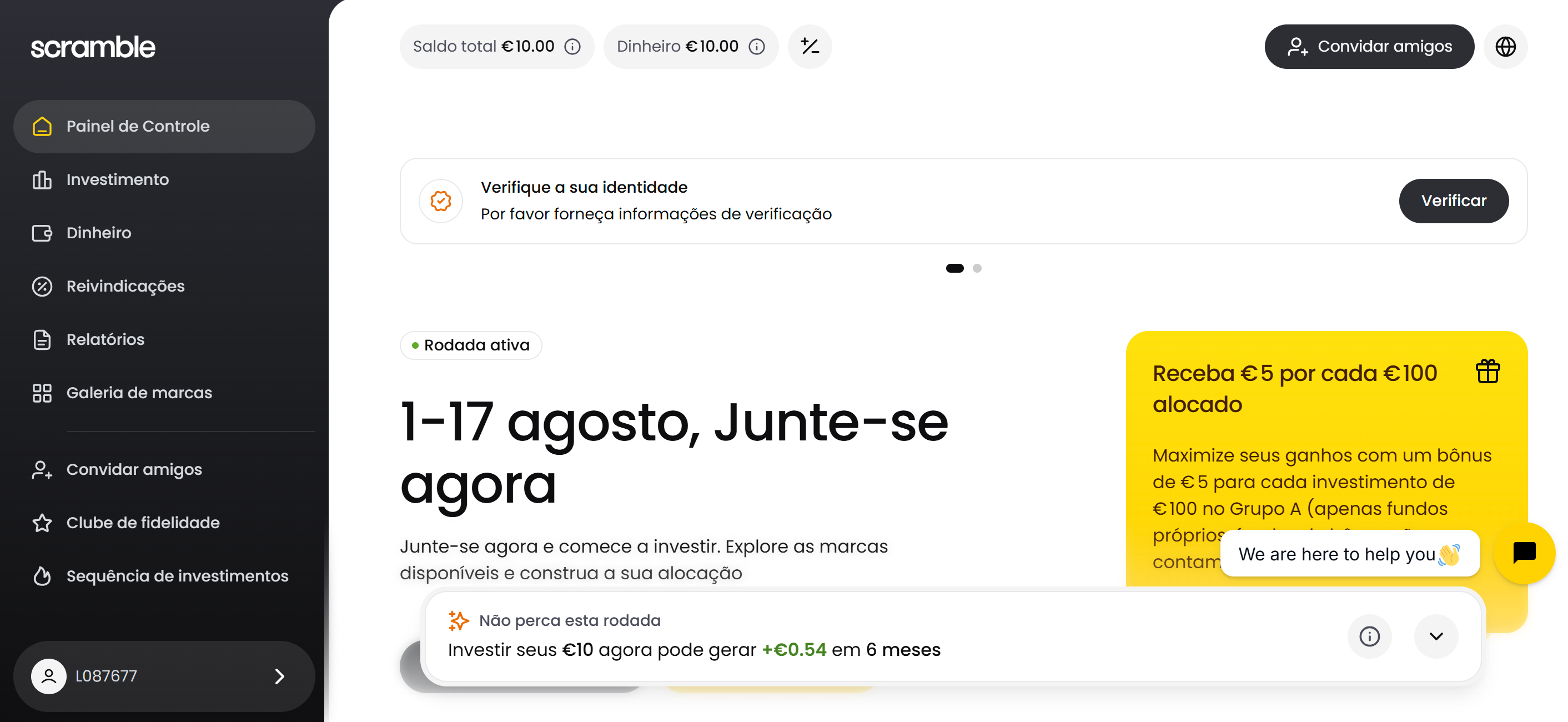
It is a model of forced diversification within the batch: if one brand fails, the others keep paying. But be careful: diversifying within a basket of small, high-risk companies does not turn the basket into a low-risk investment.
An important legal detail: you are not making a loan
Reading Scramble's Terms of Use, it becomes clear that the platform no longer supports the conclusion of new direct financing contracts between investors and companies. What the investor does today is acquire "Claims": assigned credit rights, originating from previous financing contracts, through assignment agreements.
It is no coincidence that the account menu has a section called "Claims" and that the conditions page is called "Claims assignment terms".
Why does this matter?
- Legally, you are not a direct creditor of the brand: you are an assignee of credits, with the rights and limitations defined in contracts drafted by Scramble and governed by Estonian law (jurisdiction in Tallinn).
- This credit assignment structure is also the legal argument that allows Scramble to claim it falls outside the scope of the European crowdfunding regulation (more on this next).
- Each Claim can only be sold once on the platform's internal market. After you buy, there is no way to exit before maturity: the money is locked until you are repaid.
- There is a 4-day cooling-off period to cancel the order. After that, it is irrevocable.
Regulation: who supervises Scramble? No one
This is the most important section of the article.
Scramble is not supervised by the Finantsinspektsioon (Estonia's financial supervisor, where the operating company is registered), nor by the regulator of any of the countries its investors come from, nor by any other financial authority. The company does not hold the European Crowdfunding Service Provider (ECSP) licence provided for in Regulation (EU) 2020/1503, mandatory since November 2023 for investment-based and business lending crowdfunding platforms in the European Union. We checked this point at the time of the review: Scramble does not appear in the European register of authorised crowdfunding service providers maintained by ESMA, nor is it listed among the entities supervised by the Finantsinspektsioon.
Scramble's position is that, by operating through the assignment of already-existing credits (the Claims), its activity falls outside the scope of that regulation. It may be a legally defensible thesis, but the practical result for you is the same:
- There is no deposit guarantee scheme (that is exclusive to banks).
- There is no investor compensation scheme, like the one that protects clients of regulated EU brokers up to €20,000 (Directive 97/9/EC).
- There is no regulator you can complain to if something goes wrong. Our guide to financial regulators in Europe explains who supervises what, and what happens when nobody does.
- There are no prudential capital requirements, mandatory conduct audits or product appropriateness tests for investors.
The company itself used to acknowledge this more directly in the past. The site's historical disclaimer stated that Scramble is not regulated under any financial services licence. Today, the footer merely says that capital may be at risk.
For context: when you invest through a regulated broker, like the ones we usually review (see our guide to the best trading platforms in Europe), there is supervised asset segregation, a compensation fund and a regulator with intervention powers. At Scramble, protection comes down to what is written in the platform's own private contracts. Even national crowdlending platforms that operate legally in their home markets - Portugal's Raize, for example - do so with registration and supervision, something Scramble does not have in any jurisdiction.
At the time of this review, we did not find Scramble on European regulators' warning lists. But let us be clear: not being on a warning list does not mean being authorised. It only means the regulator has not yet taken a position.
Pros and cons
Pros
- Very low minimum investment (€10)
- No direct fees for the investor (free deposits and withdrawals)
- Monthly repayments in Group A, which gradually reduce the capital at risk
- Senior/subordinated structure with a 15% first-loss tranche protecting Group A
- Declared co-investment by Scramble itself (stated as 20%+ of Group A batches)
- Track record of 100% on-time repayments in Group A since 2022 (company data)
- Website with statistics, rounds history and published annual reports
- Simple platform available in several languages
Cons
- No financial regulation or supervision, in any jurisdiction
- No compensation fund or investor compensation scheme
- Operating company with negative equity, despite its first profit in 2025
- Credit equivalent to unrated high yield, originated and assessed only by the platform's own internal models
- Zero liquidity: no way to exit before maturity
- Founders' personal guarantees of uncertain practical value
- Problematic communication ("the risk is low")
- Manual tax obligations and Estonian courts as the forum in case of dispute
Group A vs Group B
Scramble structures each financing into two groups with very different risk and return profiles. In the platform's own words, Group A corresponds to Senior Credits and Group B to Junior Credits.
| Feature | Group A (senior) | Group B (subordinated) |
|---|---|---|
| Target annual return | Up to 12.4% | Up to 25% |
| Repayments | Monthly, from the 1st month | Only at the end of the term |
| Payment priority | First to be paid | Only paid after Group A |
| Protection | 15% first-loss tranche (absorbed by Group B) | It is the first-loss tranche: it absorbs the first 15% of losses |
| On-time repayments (Scramble data) | 100% since 2022 | 100% since 2022 (Scramble's public statistics; earlier platform disclosures showed lower figures for Group B) |
| Profile | More conservative (within a high-risk product) | Riskier |
In capital markets language, this is a tranche structure similar to securitised debt: Group B is junior debt that protects the senior debt (Group A). Scramble currently reports 100% on-time repayments for both groups. That figure deserves the same caveat as everything else here: it is the company's own data, unverified by any third party, and the 2025 report shows the group has been stepping in to cover payments on behalf of insolvent borrowers. The first-loss structure only means something if losses are actually being recognised. The detailed conditions of each group are on the claims assignment terms page.
Important note: the track record of 100% on-time repayments in Group A is real according to the platform's data, but it covers only about 4 years, in a period without a severe European recession, and it is not verified by any independent entity.
Fees: where does Scramble make money?
For the investor, Scramble advertises zero direct costs:
| Item | Cost |
|---|---|
| Account opening | €0 |
| Deposits | €0 (bank transfer costs may be charged by your bank) |
| Withdrawals | €0 |
| Investment fee | €0 |
| Minimum investment | €10 |
The company's revenue model is based on service fees charged to the financed brands. In other words, the companies pay the platform, with the cost embedded in the interest rates they bear. According to the 2025 annual report, Scramble earns more than €6 for every €100 of credits sold on the platform.
Two points of attention in the Terms of Use:
- A "Scramble Service Fee" and other transaction expenses are provided for, automatically debited from your virtual account, with rates defined on the website. Scramble can unilaterally change these rates or create new fees with just 10 days' notice.
- The platform offers generous acquisition bonuses: €10 for opening an account and €5 for every €100 invested in Group A. Bonuses of this kind represent a significant customer acquisition cost: in 2025, Scramble spent around €887,000 on customer acquisition and marketing, almost 4 times more than in 2024.
How are the companies selected? And is this "junk" debt?
Brand selection is done exclusively through Scramble's internal models and analyses: market research, assessment of the business and the founders, financial due diligence and approval of a credit limit. There is no independent entity (auditor, rating agency, trustee) validating the quality of the credits, and the brands' financial statements are not published to investors.
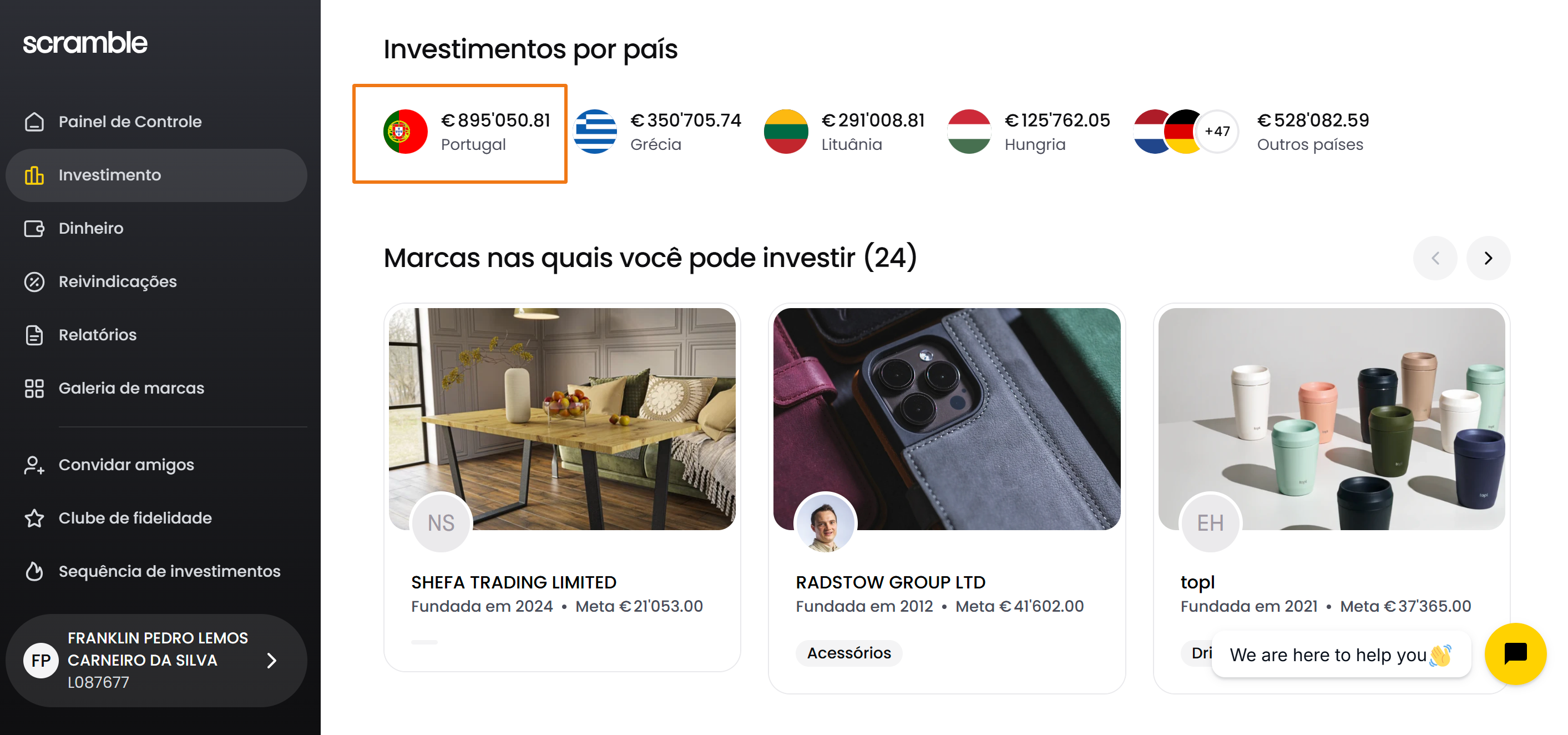
There is an evident structural conflict of interest here: Scramble only makes money if it approves companies and sells the credits to investors. The entity that originates, assesses the risk and distributes is one and the same, with no external supervision. The company partially mitigates this conflict by stating a "skin in the game" of 20% or more in Group A batches, which is positive, but the figure is self-declared, not contractually owed to investors, and does not replace independent scrutiny.
As for the risk classification: yes, in functional terms, this is the equivalent of unrated high yield debt, the category informally known as "junk". The reasoning is simple: a small company that agrees to pay rates capable of generating 12% to 25% per year for investors does so because it cannot get bank or institutional financing on normal terms. This is not an insult to the brands - many are legitimate, growing businesses. It is simply the definition of sub-investment grade credit. The difference compared with traditional high yield bonds is that here there is no rating, no prospectus approved by a regulator and no secondary market. If high yield credit is what you are after, the regulated version of that exposure is covered in our guide to the best high yield euro bond ETFs.
"The risk is low": the platform's most worrying phrase
In the FAQ section inside the account itself, Scramble states that "the risk is low and diversified".
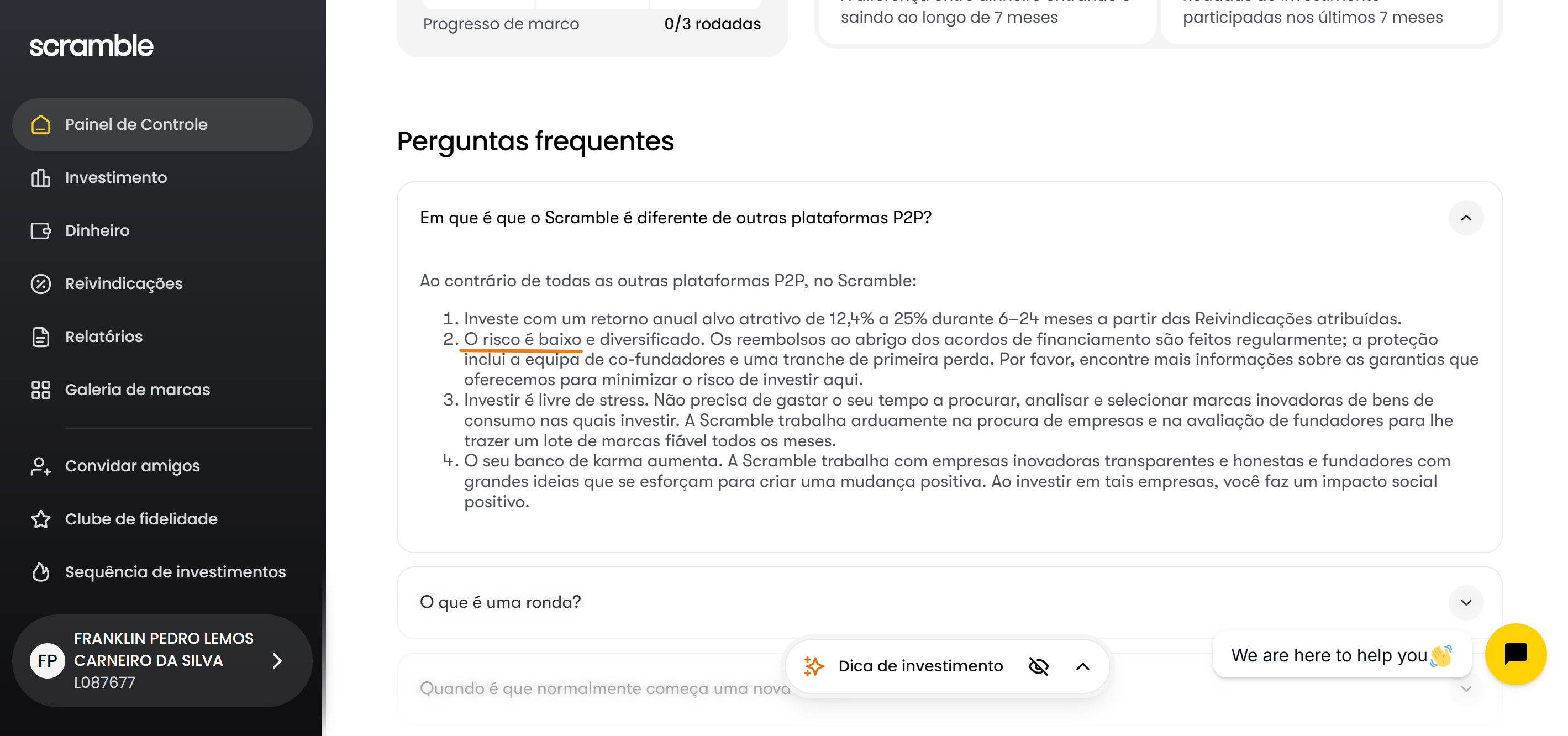
This phrase is, in our opinion, the platform's biggest communication red flag. In finance, there is no return without risk: when a product targets 12.4% to 25% per year in a context where Euribor sits around 2% and a term deposit pays 2% to 3%, the premium of 10 to 23 percentage points is, by definition, a high risk premium. Calling the risk of lending to consumer goods startups with no real collateral, through an unregulated platform, "low" is a description no European supervisor would accept in an investor information document.
What the 2025 annual report of Scramble OÜ reveals
We analysed the 2025 annual report of Scramble OÜ, signed on 9 July 2026. At the time of this review, the document was not yet available on the company's website (which lists only the reports up to 2024), so we retrieved it directly from the Estonian commercial registry. For a retail investor, several points deserve attention:
- First year of profit: the company recorded a profit of €62,500 in 2025, after losses of €366,000 in 2024 and €606,000 in 2023. Revenues grew from €186,000 to €1.18 million, but the result was also helped by €743,000 of other income, largely one-off.
- Equity remains negative: -€1.54 million, below the minimum threshold required by Estonian law (it was -€1.60 million in 2024). Management's plan involves capital injections of €200,000, future profits and support from the parent company, with restoration planned only by the end of 2027.
- Total dependence on the parent company and restated accounts: in 2025, Scramble OÜ sold the platform's software to Scramble Limited (UK), so the Estonian entity you contract with no longer even owns the technology it operates and depends on the group to function. In addition, the 2024 accounts were restated for the second consecutive year: €277,000 of client funds had been improperly included in the company's own cash. In a regulated entity, the segregation of client funds is verified by auditors and by the supervisor. Here, you depend on the company's word.
- There have already been defaults, covered by the group: the report mentions receivables from the parent company relating to the reimbursement of payments Scramble made to investors on behalf of insolvent borrowers. In other words, the track record of "100% on-time repayments" in Group A has been sustained by a voluntary safety net from the group, which is not a contractual obligation and can end at any moment.
- Still very small scale: 3 employees on average, own operating cash of just €207,000 at the end of 2025 and abbreviated small-company accounts, with no external audit mentioned in the report.
- Fast growth in volume: €21.7 million invested in rounds in 2025 (triple the 2024 figure), with €12.5 million of outstanding capital at year-end.
None of this proves misconduct, and 2025 represents a clear improvement over 2024. But the overall picture remains that of a micro-company with negative equity and heavy dependence on its parent, intermediating tens of millions of euros of retail investors' savings without any prudential supervision. Platform risk is real and should weigh as much as the credit risk of the brands.
The main risks
- Credit risk: you are (indirectly) lending to small, young consumer goods companies. A significant share of companies at this stage close within their first years of life.
- Platform risk: if Scramble OÜ shuts down or becomes insolvent, the Terms provide for payments to be made directly between the parties, but in practice the collection of Estonian and British credits by an individual investor from another country would be difficult and expensive.
- Regulatory risk: no authority supervises the platform and there is no compensation fund or ombudsman to turn to.
- Liquidity risk: the money is locked until maturity. Each Claim can only be traded once, so there is no real exit door. If you need the money before the term ends, there is no way to get it back.
- Voluntary safety net: historical defaults were covered by the group by its own decision, with no contractual obligation. You should not assume that protection will exist in the future.
- Fragile guarantees: the "guarantees" are personal sureties from the founders, limited (up to 40% per founder, calculated on an unusual concept of "lifetime income") and of uncertain cross-border enforceability. They are not real collateral.
- Limited protection in Group A: the first-loss tranche covers only 15%. In a recession, with widespread defaults in a batch, Group A loses too.
- Short track record: the current operation has existed since mid-2022 and has never been through a severe economic crisis.
- Limited transparency: loss rates per batch or per year, the brands' financial statements and the real distribution of returns across investors are not published.
Fact-checking the finfluencer videos
We analysed two videos by finfluencers promoting Scramble (from Portugal, the platform's largest market). Here are the main claims and what we found:
| Claim in the videos | What we found |
|---|---|
| "The platform is regulated and meets compliance (KYC) requirements" | False/misleading. Complying with client identification rules (KYC/AML) is not the same as being a regulated financial entity: KYC is not regulation. We checked: Scramble has no financial licence in any jurisdiction, does not appear in ESMA's register of authorised crowdfunding providers and is not supervised by the Finantsinspektsioon. |
| "Guaranteed growth loans" | Misleading. There are limited personal sureties from the founders and a 15% first-loss tranche. No capital is guaranteed - something Scramble itself admits in the Terms. |
| "Lower risk compared with other types of investments" | Unfounded. Unrated credit to startups, with no regulation and no liquidity, sits at the high-risk end of the retail investment spectrum. |
| Example of financing a local startup | Inaccurate. The financed brands are mostly British (in 2025, more than 90% of Scramble's revenues originated in the UK). European retail investors mostly come in on the lending side, not on the side of those being financed. |
| "Group A with 100% on-time repayments since 2022" | Consistent with the data published by Scramble, but this is the company's own information, not verified by third parties. The 2025 report indicates, in fact, that Scramble made payments to investors on behalf of insolvent borrowers, later reimbursed by the parent company. Defaults exist - they were simply absorbed by the group. |
| "Average return of 16.36% per year" and "€45 million invested" | These are the numbers published by the platform itself, and the volume figure is already out of date (Scramble now reports €51.2 million). There is no independent validation, and the average aggregates the two groups, so it does not reflect the expected return of someone investing only in Group A. |
| "You have to declare the income yourself in your tax return" | Correct. See the tax section below. |
In summary: the videos describe the platform's mechanics reasonably well, but they systematically downplay the central point (the total absence of regulation) and use "guarantee" and "low risk" language that would not pass the scrutiny of any supervisor.
Taxes
Scramble does not withhold tax anywhere. The interest you receive is foreign-sourced investment income and it is up to you to declare it in your country of residence:
- In most European countries, it is taxed as investment income, at your local rates and rules
- The source country is Estonia, which may be relevant for the foreign-income section of your return
- There is no local paying agent, so nothing is reported or withheld automatically on your behalf
- If in doubt, check with a local tax adviser - the rules vary widely from country to country
Unlike a savings account at a regulated bank or a broker with a local paying agent, there is no automation here: if you do not declare the income, you are non-compliant.
Scramble vs a regulated broker: the structural difference
We usually review regulated brokers, with supervision and compensation schemes. It is worth making the difference explicit:
| Item | Regulated EU broker | Scramble |
|---|---|---|
| Supervision | National EU regulators (CySEC, KNF, BaFin, AFM, etc.) | None |
| Investor compensation scheme | Yes, up to €20,000 (Directive 97/9/EC) | Does not exist |
| Asset segregation | Mandatory and audited | Declared by the company, with no external verification |
| Products | Stocks, ETFs, bonds (assets with a market) | Assigned credits on startups, with no rating |
| Liquidity | Daily, on-exchange | Zero until maturity (6+ months) |
| Target return | Depends on the market | 12.4% to 25% (not guaranteed) |
This does not mean a regulated broker is risk-free (market risk always exists), but counterparty and fraud risk is incomparably lower within a supervised framework.
Who it is for (and who it is not for)
Scramble may make sense only for investors who already have a consolidated, diversified portfolio (emergency fund, global ETFs, possibly bonds), who understand high-risk private credit and who allocate to this type of platform only a small slice of their wealth - money whose total loss would not affect their goals.
It is not suitable for anyone starting to invest, for short-term goals, for the emergency fund, or for anyone who cannot tolerate the real possibility of losing 100% of the capital invested.
Verdict
Scramble does not appear to be a fraud: it is a real company, with a public registration, published annual reports and an operating track record of about 4 years with payments made. But it is a high-risk product, promoted across Europe with a low-risk narrative and without any supervision to discipline that communication.
The three facts that sum up this review: first, no one regulates Scramble and no compensation mechanism exists. Second, the company operating the platform has negative equity and depends on its group to operate, even though 2025 was its first profitable year. Third, the 12% to 25% returns are the price of the risk of lending to companies that banks will not lend to. If you decide to test it, do so with amounts you can afford to lose entirely.
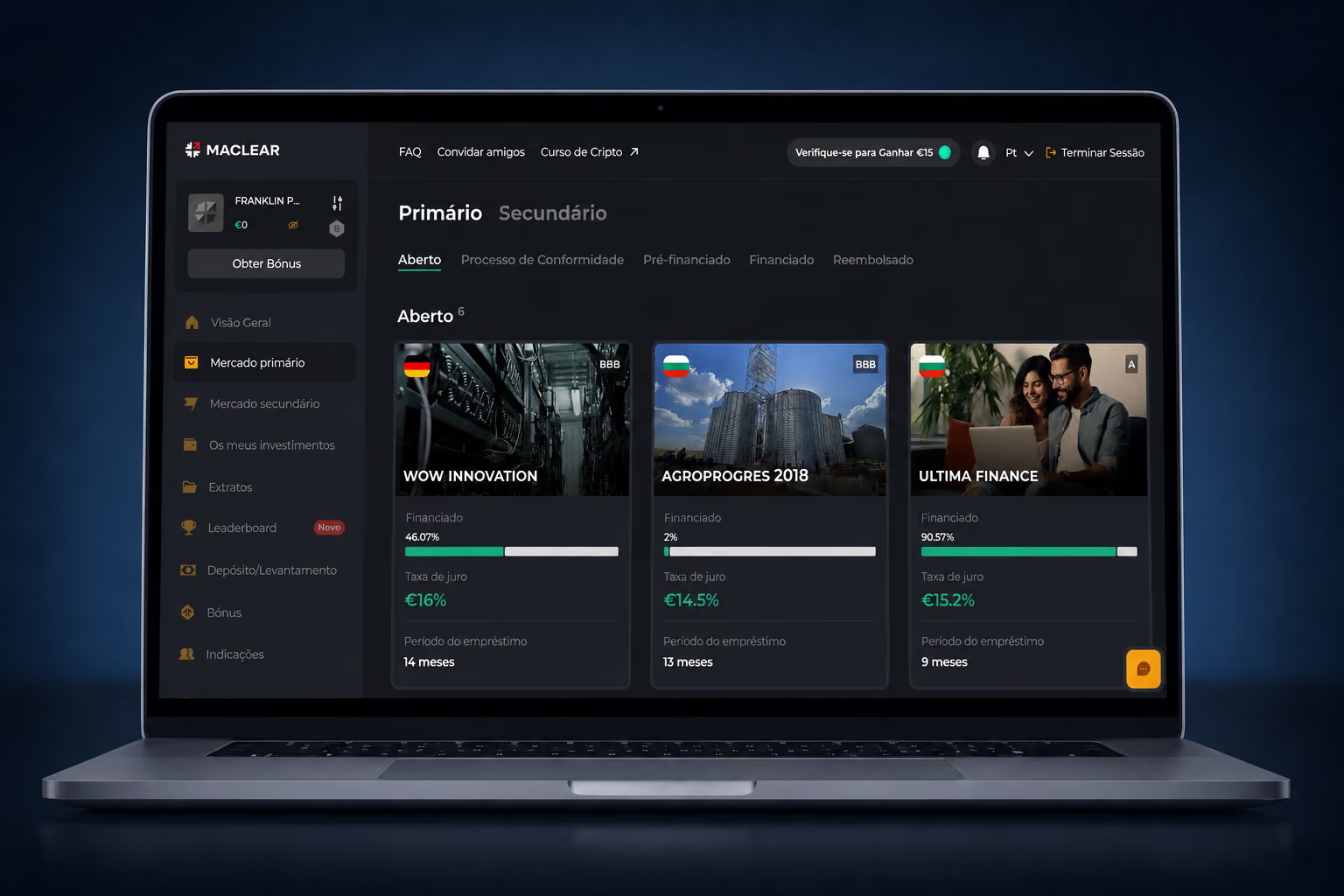
For our part, we opened an account and invested a small amount to test the registration, deposit and allocation process. We will update this article if any relevant regulatory or operational news emerges. We applied the same method to another platform heavily promoted across Europe in our Maclear review.
This article is for information purposes only and does not constitute financial advice. Invest responsibly.