



Perpetual CFDs are one of the newest additions to the world of online trading, taking a product that first became popular in crypto markets and bringing it into a regulated, familiar trading environment.
In July 2026, Pepperstone announced a major expansion of its Perpetual CFD suite, extending “always-on” market access beyond digital assets to metals, indices and energy markets.
But what exactly is a perpetual CFD, how does it differ from a traditional CFD or a futures contract, and what are the pros and cons for retail traders? This guide breaks it down.
What is a Perpetual CFD?
A Perpetual CFD (Contract for Difference) is a leveraged derivative that lets you speculate on the price of an asset, such as gold, an index, or a stock, without an expiry date. As with any CFD, you never own the underlying asset; you simply profit or lose from the difference between the price when you open the position and when you close it.
The “perpetual” part is what sets it apart from a standard futures contract. Traditional futures have a fixed settlement date, after which the contract expires and has to be rolled over. A perpetual contract has no expiry, so you can hold the position for as long as you like, provided you continue to meet the margin and financing requirements.
Perpetual contracts first took off on crypto exchanges, where “perpetual futures” now make up a large share of global trading volume. What is new is that regulated brokers are bringing the same mechanics to traditional asset classes through the CFD framework that European traders already know. You can read more about how these instruments work in our CFD vs ETF guide.
How do Perpetual CFDs work?
Perpetual CFDs combine three familiar mechanics:
- No expiry date: unlike futures, the contract never settles, so there is no roll-over to manage.
- Leverage and margin: you put down a fraction of the position’s value as margin, which amplifies both gains and losses.
- Funding rate: to keep the contract price anchored to the underlying “spot” price, a periodic funding fee is exchanged between long and short traders. If you hold a position over time, this funding cost (similar to an overnight financing fee) is the main ongoing expense.
Because there is no expiry, perpetual CFDs are designed for traders who want continuous, potentially 24/7 exposure to a market - not for long-term investors who want to own real assets and collect dividends.
Perpetual CFDs at a glance
Pros and cons
Pros
- No expiry date and no contract roll-overs to manage
- Continuous, potentially 24/7 access to markets, even outside traditional exchange hours
- Perpetual market mechanics within a regulated CFD framework
- No need for crypto wallets, exchange collateral or separate venue onboarding
- Ability to go long or short and to use leverage
- Exposure across asset classes - crypto, metals, indices, energy and stocks
Cons
- Leverage magnifies losses as well as gains - CFDs are high-risk products
- Funding and overnight financing fees can add up on positions held over time
- No ownership of the underlying asset and no dividends
- Not suitable for long-term or passive investors
- Not available to retail clients in every country (for example, the UK)
Pepperstone expands its Perpetual CFD offering
On 13 July 2026, Pepperstone - one of the world’s leading CFD brokers - announced the expansion of its Perpetual CFD offering as financial markets increasingly move toward continuous, 24/7 trading.
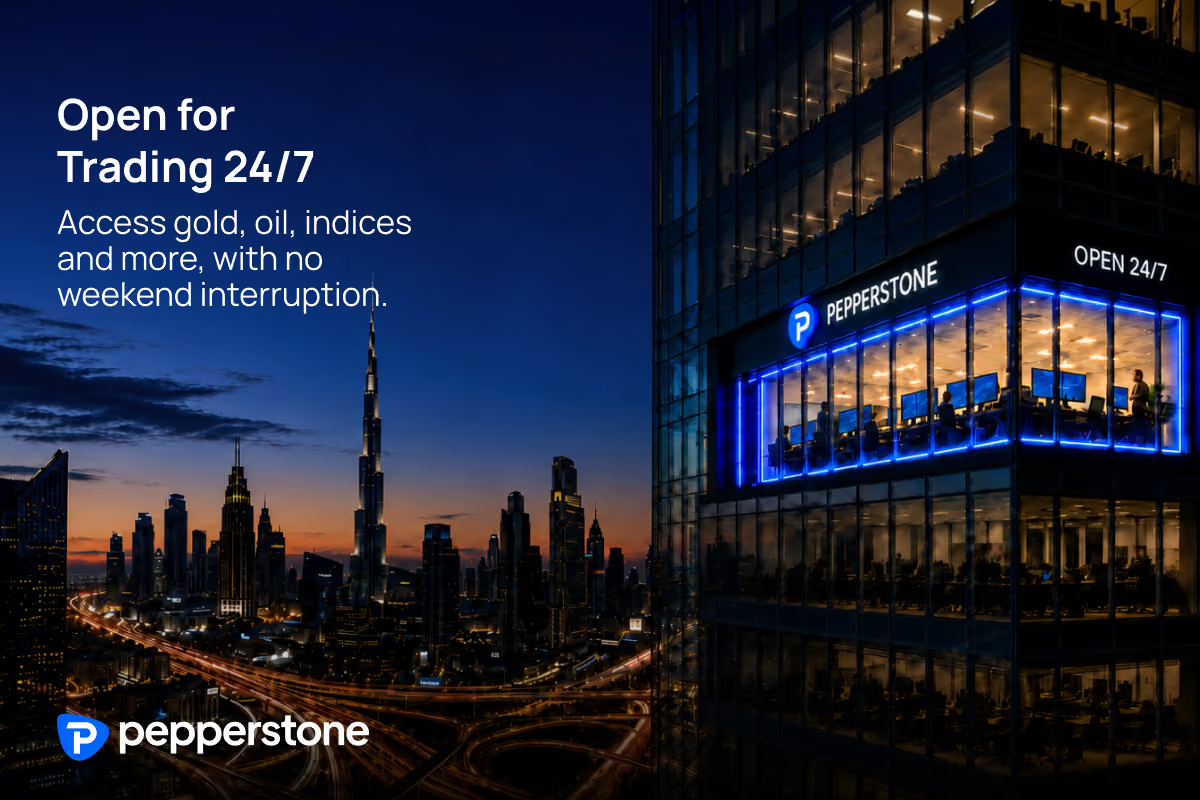
The rollout extends perpetual market access beyond digital assets. Having already launched SPCX.US-PERP, a synthetic perpetual CFD referencing SpaceX, Pepperstone plans to add perpetual CFDs on Gold, Silver, Nasdaq, S&P 500, WTI and Brent Crude, extending around-the-clock access across metals, indices and energy markets.
The context is a broader shift across global finance: perpetual futures are estimated to have exceeded US$90 trillion in annual trading volume in 2025, while tokenised financial assets could grow from around US$35 billion today to roughly US$2 trillion by 2030. Together, these trends point to a future of always-on, increasingly digital markets.
“The concept of markets opening and closing at fixed hours is becoming increasingly outdated. Capital, information and risk now move continuously, and we believe 24-hour markets will become a standard feature of modern finance. Our focus is on bringing that future into a regulated environment that traders already know and trust.”
Tamas Szabo, Group CEO, Pepperstone
Unlike the perpetual futures offered on many crypto exchanges, Pepperstone’s Perpetual CFDs operate entirely within its existing CFD infrastructure. Traders can access perpetual market exposure through a standard trading account, without crypto wallets, exchange collateral arrangements or separate venue onboarding. All products are offered under the group’s global regulatory licences.
“Major market-moving developments no longer wait for opening bells. Information is global, instantaneous, and continuous, and traders increasingly want access to markets when opportunities emerge.”
Chris Weston, Head of Research, Pepperstone
Availability: Perpetual CFDs are available across most of Pepperstone’s regulated entities globally. They are not available to retail clients in the UK (FCA) or in Kenya (CMA); all other group licences provide access to trade perpetuals.
Where can you trade Perpetual CFDs?
Pepperstone offers Perpetual CFDs to eligible clients through its regulated platforms. You can explore the product on its Perpetual CFDs page, or read Pepperstone’s own Perpetual CFDs guide for a deeper technical walkthrough.
As with any leveraged product, make sure you understand the funding costs, leverage limits and risks before opening a position.
Disclaimer: CFDs are complex instruments and come with a high risk of losing money rapidly due to leverage. Between 74-89% of retail investor accounts lose money when trading CFDs. You should consider whether you understand how CFDs work and whether you can afford to take the high risk of losing your money. This article is for informational and educational purposes only and does not constitute investment advice. Perpetual CFDs are not available to retail clients in all jurisdictions.