Estonia e-Residency Bank Account: Best Options Compared





Estonia’s e-Residency programme lets anyone in the world start and run an EU company 100% online. There’s just one part of the setup that still trips people up: the bank account. Here’s an honest look at which accounts actually work for e-residents (and for expats living in Estonia), how much they cost, and where we’d start.
Can e-residents open a bank account in Estonia?
Yes - but almost never at a traditional Estonian bank, at least not at first. Since the money-laundering scandals of the late 2010s, Estonian banks apply strict due diligence to non-residents: they typically demand a genuine economic connection to Estonia (clients, employees or sales there), charge non-refundable application fees of €300–750, and often require an in-person visit.
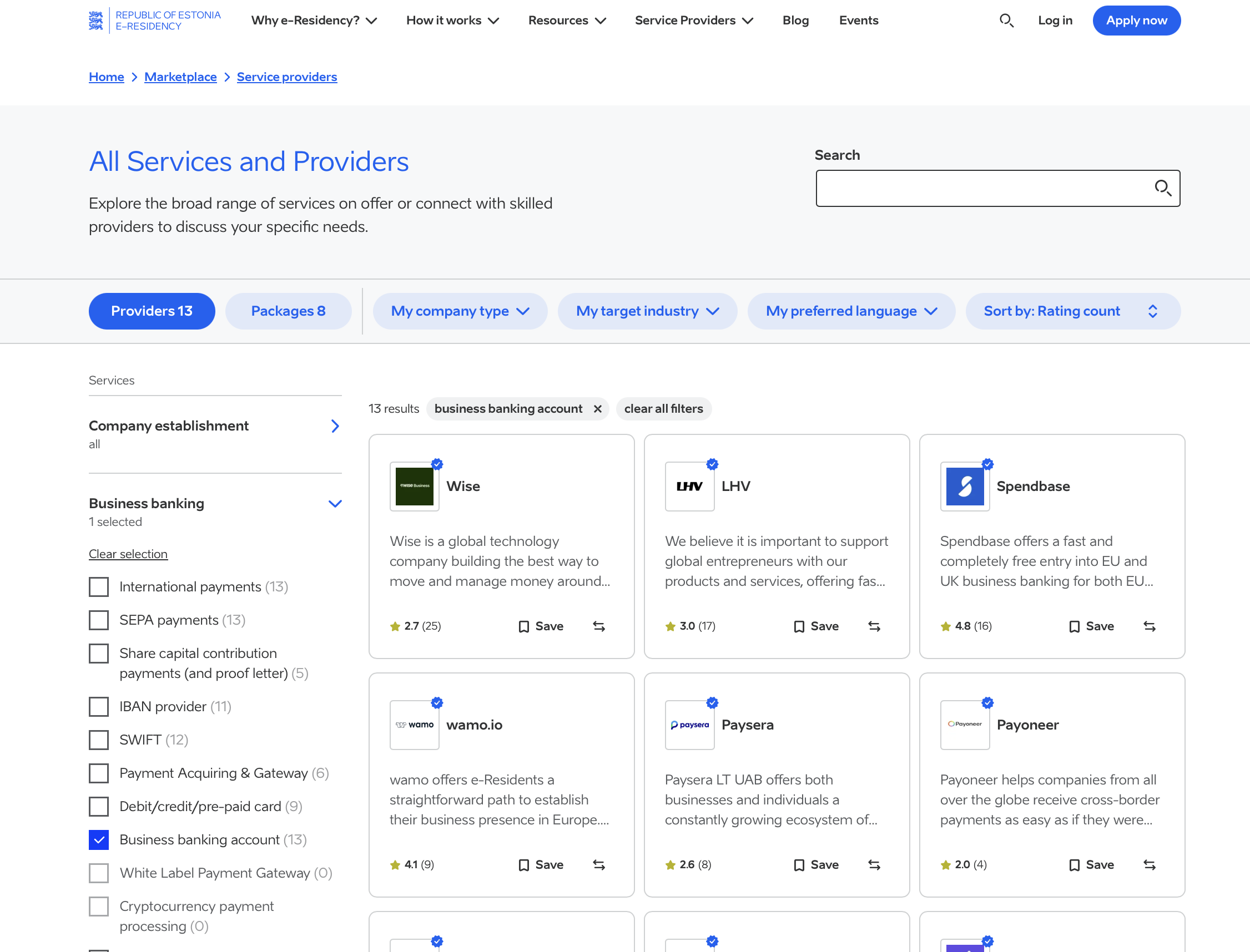
The good news is that you don’t need one. Estonian law lets you pay in your company’s share capital and run all your banking through a licensed credit or payment institution anywhere in the EEA, which is exactly what most e-residents do. Two rule changes make this straightforward. Since 1 February 2023 the minimum share capital for an OÜ is €0.01 per shareholder instead of €2,500, and no confirmation from a financial institution is required unless the contribution exceeds €50,000. The official e-Residency Marketplace itself points founders to these providers.
Best business accounts for e-resident companies
1. Wise Business - our pick
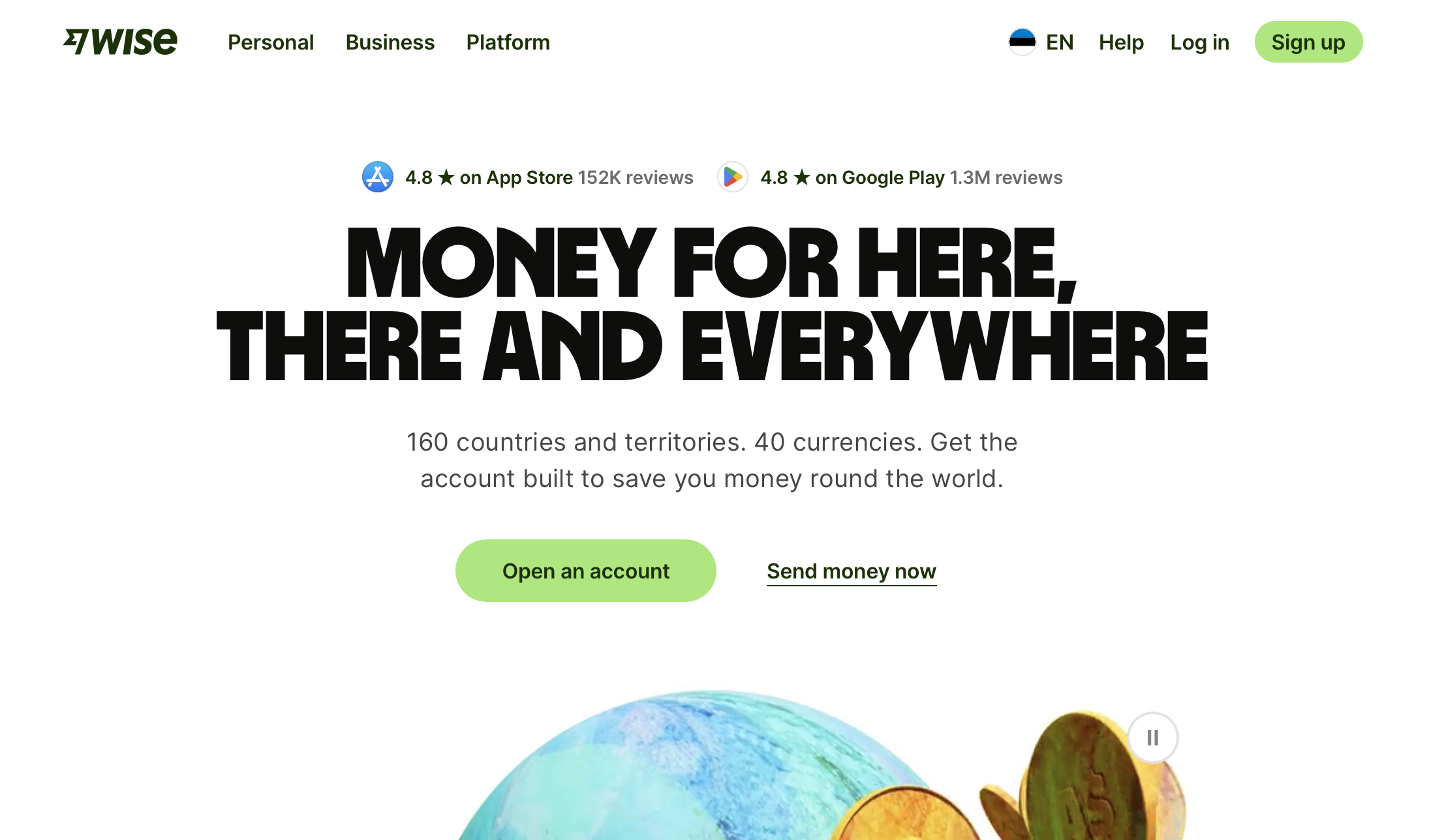
Wise Business is the default choice for Estonian OÜs. Onboarding is fully remote, you get a European IBAN that works for share capital contributions, local account details in 8+ currencies, debit cards, invoicing and payroll tools, and conversions at the mid-market rate (from ~0.47%). There’s a small one-off setup fee (around €50) and no monthly fee after that.
The only real caveat: Wise is a regulated payment institution, not a bank, so funds are safeguarded rather than covered by a deposit guarantee scheme.
2. Revolut Business
Revolut Business works well for EEA-registered companies, including Estonian ones: paid plans starting at around €10/month (Basic), corporate cards with spending controls, and integrations with Xero, Shopify and more. Onboarding is remote but expect somewhat stricter verification than Wise.
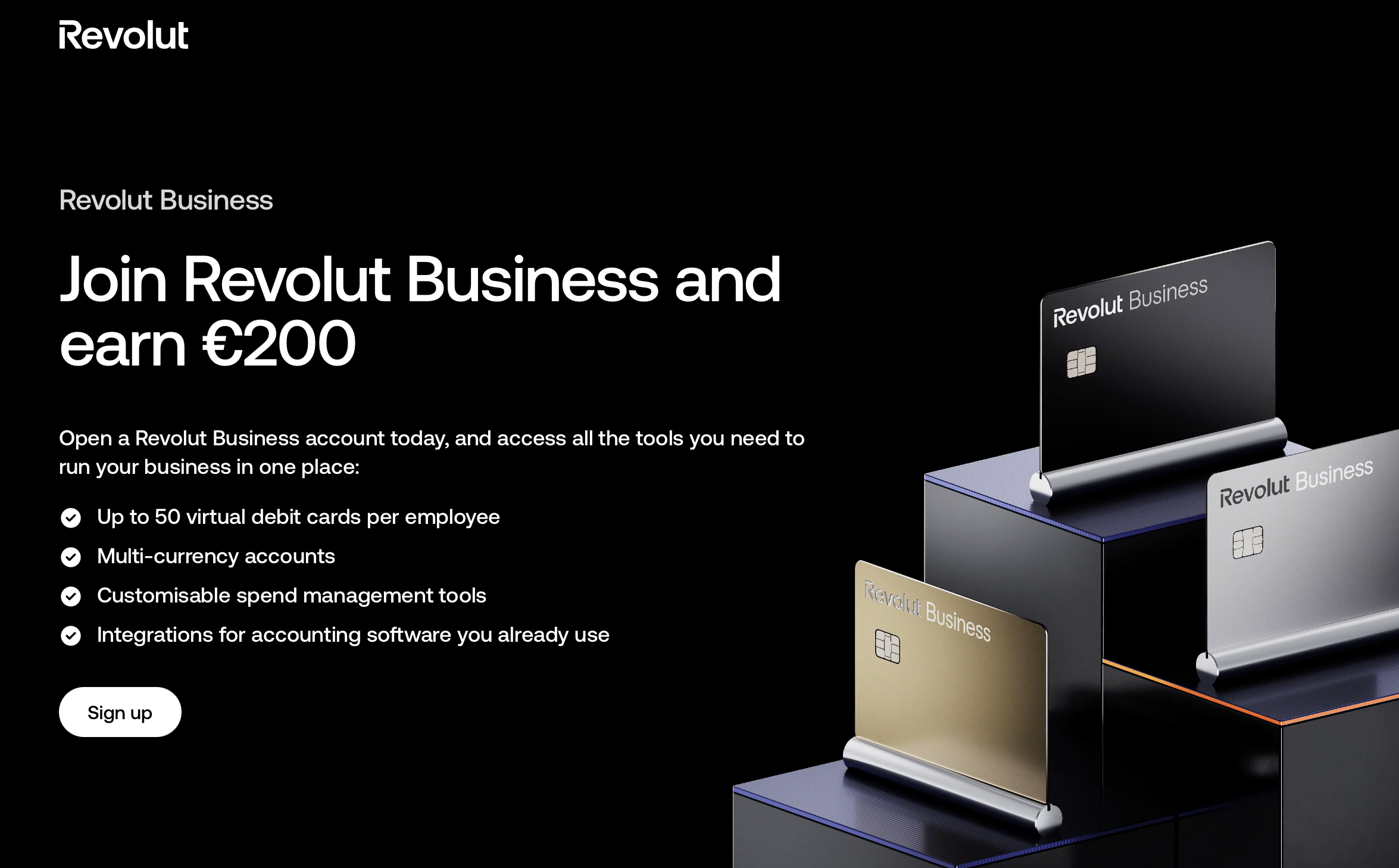
Bonus: new business customers can currently get €200 in welcome credit - see how it works here.
3. LHV - the real Estonian bank
LHV is the most e-resident-friendly of Estonia’s traditional banks and the one to graduate to once your company has a track record. Be ready for: a €300 non-refundable application fee, a trip to Tallinn to open the account, roughly €30/month for non-resident businesses, and a requirement to show a genuine connection to Estonia. In exchange you get a real Estonian IBAN, deposit protection, low local fees and the best banking app in the country - but note that even paying applicants are sometimes rejected.
4. Paysera
Paysera is a budget-friendly Lithuanian EMI popular with euro-focused e-resident companies: free account opening, around €5/month including 30 SEPA transfers, and e-commerce payment tools. Exchange markups (1–3%) make it less attractive for multi-currency work.
5. Payoneer
Payoneer makes sense mainly if you sell on marketplaces (Amazon, Upwork, Fiverr): it collects USD/EUR/GBP locally from 2,000+ platforms. Pricing is channel-based and it’s weaker for day-to-day B2B banking.
Comparison of the best business bank accounts in Estonia
| Provider | Base price | Opening fee | Bank licence | €100k deposit guarantee | Accepts e-resident companies | Fully online | Estonian IBAN | Interest on balance | Best for |
|---|---|---|---|---|---|---|---|---|---|
| Wise Business | €0/month | ~€50 | ❌ | ❌ | ✅ | ✅ | ❌ | ⚠️ Investment product | Most e-resident companies |
| Revolut Business | €10/month | €0 | ✅ | ✅ | ✅ | ✅ | ❌ | ✅ Up to ~1.75% | Cards and expense management |
| LHV | ~€30/month | €300 | ✅ | ✅ | ⚠️ | ⚠️ | ✅ | ✅ From ~0.8%* | Established Estonian businesses |
| Paysera | ~€5/month | €0 | ❌ | ❌ | ✅ | ✅ | ❌ | ❌ | Low-cost EUR payments |
| Payoneer | €0/month* | €0 | ❌ | ❌ | ✅ | ✅ | ❌ | ❌ | Marketplaces and freelancers |
Information and indicative pricing checked on 29 July 2026. Fees, interest rates, eligibility rules and account features may change. Account approval is never guaranteed, and statutory deposit-protection exclusions may apply.
Best personal accounts for e-residents and expats in Estonia
e-Residency doesn’t entitle you to a personal Estonian bank account - but if you live in Estonia (or anywhere in the EEA), these open fully online:
- Revolut, available in Estonia, multi-currency with budgeting, savings and investing. New users can grab a welcome bonus of up to €30.
- Wise, the personal version of our favourite: great rates, local details in multiple currencies, ideal if you’re paid from abroad.
- N26, a fully licensed German bank that serves Estonia, currently with a welcome bonus for eligible new customers. Our N26 promo code guide has the current code and conditions.
- LHV personal account, the local favourite if you actually reside in Estonia. LHV may also open personal accounts for established business clients.
For the broader comparison, see our guide to the best online banks in Europe.
What about Swedbank, SEB and Coop Pank?
Estonia’s big retail banks serve residents well, but for e-residents they’re usually a dead end: due diligence fees of €300–750 (non-refundable), monthly non-resident surcharges, in-person requirements, and a strong preference for companies with substantial Estonian operations. Unless you have real local substance, don’t start here.
What accountants and the e-resident community say
We cross-checked our picks against the firms that handle Estonian companies every day - and the community itself:
- Unicount’s honest banking guide rates realistic access as: Wise and Revolut “high”, LHV and Coop Pank “medium”, Swedbank/SEB “low” - and warns that no provider can guarantee approval, so avoid firing off multiple applications at once.
- Silva Hunt calls Wise the “cleanest default choice” for service businesses and suggests adding a traditional bank only once you have real Estonian substance.
- Companio shortlists Revolut Business, Wise, Payoneer and Paysera, and reminds founders that fintechs generally do not lend. That point needs a 2026 caveat: Revolut Business operates in the EEA through Revolut Bank UAB and does pay interest on eligible balances, and Wise offers a separate investment product rather than deposit interest.
- On r/eResidency, the recurring theme is the same: traditional banks are hard to get without Estonian ties, so most founders run their OÜ on Wise and/or Revolut without issues.
Bottom line
For a typical e-resident company, the winning playbook is simple: start with Wise Business (remote, cheap, works for share capital), optionally add Revolut Business for cards and integrations (€200 bonus), and once you have 6–12 months of clean, documented activity, consider applying to LHV for a true Estonian bank account. For personal banking as an expat in Estonia, Revolut (up to €30 bonus) and N26 cover almost everything.