N26 vs Revolut in 2026: which one should you choose?




N26 and Revolut are two of the most talked-about digital banks in Europe.
N26 is a German digital bank, 100% online, known for its simple app and its free basic account.
Revolut started as a currency exchange and travel app and is today a full digital bank, with local IBANs in a growing number of European countries, savings and investing all in the same app.
For many Europeans, the biggest difference comes down to one detail: the IBAN you get. Revolut has been rolling out local IBANs through branches in a growing list of countries (such as France, Spain, Ireland, the Netherlands and Portugal), while N26 gives most customers a German IBAN (with local IBANs only in a few markets, such as France, Spain and Italy). That has practical consequences for salaries, direct debits and domestic payment systems. In this article we compare the two point by point, with the European reality in mind, to help you decide which one makes more sense for you.
Summary
- Revolut: the better option as a main digital account in most of Europe. It offers local IBANs in several countries, savings with daily interest (up to around 2.25% AER, depending on plan and country) and integrated investing. It also offers a welcome bonus to new customers (typically €10-€30, depending on your country).
- N26: a solid, simple digital account with no exchange-rate markup on card payments and a German IBAN in most countries. Great for travel and as a secondary account, but the foreign IBAN can be less convenient for everyday banking in some countries. It offers up to €35 in bonus with a promo code.
For everyday banking, Revolut is clearly the more complete of the two, mainly because of the local IBANs and the wider feature set. N26 can make sense as a secondary account for travel, or if you live in (or deal with) Germany. Since both are free to keep, many people simply use both.
General comparison table
| Feature | N26 | Revolut |
|---|---|---|
| What it is | German digital bank (with a banking licence) | Digital bank (with a banking licence) |
| Legal entity | N26 Bank SE (Germany) | Revolut Bank UAB (Lithuania, with branches across Europe) |
| Regulation | BaFin / Bundesbank / ECB | Bank of Lithuania / ECB |
| Local IBAN | German (DE) in most countries; local IBAN in a few markets (e.g. France, Spain, Italy) | Local IBAN in a growing number of countries; Lithuanian (LT) elsewhere |
| SEPA transfers and direct debits | Yes | Yes |
| Deposit guarantee | Yes (German scheme, up to €100,000) | Yes (Lithuanian scheme, up to €100,000) |
| Monthly fee on the basic account | €0 (Standard plan) | €0 (Standard plan) |
| FX on card payments | No markup, in all currencies and with no limit | Interbank rate up to a monthly limit; weekend markup |
| Free ATM withdrawals (eurozone) | 2 to 8/month, depending on the plan | Free up to the monthly limit of your plan |
| Savings with interest | Yes (Instant Savings; low rate) | Yes (up to around 2.25% AER, varies by plan and country) |
| Investing | Stocks, ETFs and crypto (availability varies by market) | Stocks, ETFs, bonds, crypto and robo-advisor |
| Insurance | Included in paid plans (travel; phone insurance on Metal) | Included in paid plans (travel) |
| Cashback / rewards | 1% on travel spending (paid plans) | RevPoints |
| Cash deposits | No | No |
| Customer support | Chat and email, every day from 7:00 to 23:00 | In-app chat 24/7 |
| Welcome bonus | Up to €35 (with a promo code) | €10-€30 (varies by country) |
Data collected from both brands. Fees, rates, plans and conditions can change and may vary by country - always confirm the current information on each platform.
N26 - overview
N26 is a German digital bank, 100% online and mobile-first. It operates through N26 Bank SE, licensed in Germany and supervised by BaFin, the Bundesbank and the European Central Bank, and serves customers across most of the euro area under that licence. The basic account is free, doesn't require proof of address in every market it operates in, and is very popular with digital nomads and people who value mobility.
The app is available in several languages, is one of the most intuitive on the market, and gives you full control over the Mastercard: block and unblock it, change limits, enable or disable online payments and withdrawals, all in the app. It also adds savings sub-accounts (Spaces), the Instant Savings account and, more recently, investing in stocks, ETFs and crypto. The point worth understanding well is that N26 gives most customers a German IBAN (DE) rather than a local one, which has implications for everyday banking in some countries.
.avif)
N26 pros and cons
Pros
- Standard account with no maintenance fees and a very simple app
- No exchange-rate markup on card payments, in any currency and with no monthly limit
- App in multiple languages with full card control and sub-accounts (Spaces)
- Deposits covered by the German deposit guarantee scheme up to €100,000
Cons
- German IBAN (DE) in most countries: domestic payment schemes and some billers may not work with it
- Possible friction with direct debits and salary payments in some countries (IBAN discrimination is illegal under SEPA rules, but it still happens)
- Low interest on savings, with better rates locked behind paid plans
- Customer support only by chat and email (7:00-23:00), with no phone line or physical branches
- No cash deposits in most markets
- As a foreign-IBAN account, you may need to declare it separately to your local tax authority
Revolut - overview
Revolut started as a currency exchange and travel app and evolved into a complete digital bank account. It operates through Revolut Bank UAB, licensed in Lithuania and supervised within the euro area's banking framework, and has been opening local branches across Europe - which is why customers in a growing list of countries (such as France, Spain, Ireland, the Netherlands and Portugal) get a local IBAN, making salaries, direct debits and domestic payments much smoother.

In a single app you get a current account, cards, currency exchange at the interbank rate, savings with interest, investing in stocks, ETFs, bonds and crypto, budgeting tools and a points programme (RevPoints). It's the closest thing to an "all-in-one" account, and the one best suited to Europeans who want a digital account as their main bank account.
Revolut pros and cons
Pros
- Local IBANs in a growing number of European countries, with smooth salaries and direct debits
- Savings with daily interest (up to around 2.25% AER) and investing built into the app
- Interbank exchange rate and very competitive international use
- Feature-rich app, with virtual cards and detailed controls
- Deposits covered by a deposit guarantee scheme up to €100,000
Cons
- The best limits and perks require paid plans
- Fee-free currency exchange only up to a monthly limit on the Standard plan, with a weekend markup
- Customer support only via in-app chat, with no physical branches
- No cash deposits
Local IBANs, SEPA and everyday banking
This is where most of the comparison is decided for many Europeans.
Revolut gives you a local IBAN in a growing number of countries, through local branches of Revolut Bank UAB. In practice, in those markets you can receive your salary, set up national direct debits (utilities, telecoms), and pay bills and taxes without friction - your account behaves like one from a domestic bank. Elsewhere, you get a Lithuanian (LT) IBAN, which works across SEPA but may occasionally be rejected by less diligent billers or employers.
N26 gives most customers a German IBAN (DE), with local IBANs only in a few large markets (France, Spain and Italy). Legally, SEPA rules prohibit so-called "IBAN discrimination": a company in the euro area cannot refuse an IBAN from another euro-area country for transfers and direct debits. In theory, you can receive your salary and set up direct debits with a German IBAN anywhere in the euro area. In practice, though, there are two important limitations:
- Domestic payment schemes: several countries run domestic payment systems that sit outside SEPA (for example, mobile payment schemes and pay-by-reference systems tied to the local banking network). These often only work with a local IBAN or a locally issued account, so they may be off-limits with a German IBAN.
- Paying public administrations and reference-based bills: in some countries, taxes and utility bills are paid through reference-based systems built on the domestic banking rails. Without a local IBAN, you may not have direct access to this payment method and will need workarounds.
In short: for using a digital account as your main account, Revolut has a clear edge in the countries where it offers a local IBAN. See also our comparison of the best online banks in Europe.
Fees and plans
The basic account is free with both, with no maintenance fee. The difference is in the plan structure.
N26 has four tiers: Standard (free), Smart (€4.90/month), Go (€9.90/month) and Metal (€16.90/month), with more free withdrawals, insurance and cashback as you go up. Revolut works similarly, with Standard (€0), Plus, Premium, Metal and Ultra plans (pricing varies slightly by country).
| Service | N26 | Revolut (Standard) |
|---|---|---|
| Account opening and maintenance | €0 (Standard); paid plans from €4.90 to €16.90/month | €0 (paid plans carry a monthly fee) |
| SEPA transfers (app) | €0 | €0 |
| ATM withdrawals (eurozone) | 2 to 8 free/month depending on the plan; then €2 each | Free up to your plan's monthly limit; then a fee |
| FX on card payments | No markup, in any currency and with no limit | Interbank rate up to the monthly limit; then a fee, with a weekend markup |
| Withdrawals outside the eurozone | 1.7% fee on Standard and Smart; free on Go and Metal | Free up to the monthly limit; then a fee |
| Physical debit card | Depends on the plan (delivery fee on Standard) | Delivery fee on Standard; included in higher plans |
| Credit card, cheques and cash deposits | Service not available | Service not available |
This table covers the most common services and doesn't replace each provider's full fee schedule and per-plan limits, available in their apps and websites. Fees and conditions may vary by country.
Regulation and safety
Both accounts are covered by a deposit guarantee scheme up to €100,000 per depositor, but through different routes.
N26 operates through N26 Bank SE, with a German banking licence, supervision by BaFin and the European Central Bank, and deposits protected by the German deposit guarantee scheme. Revolut operates through Revolut Bank UAB, with a banking licence from Lithuania (and local branches in several European countries), with deposits protected by the Lithuanian deposit guarantee scheme. In both cases, your money is protected up to €100,000 under EU-harmonised rules - just through the German or Lithuanian scheme rather than your home country's one.

| Safety | N26 | Revolut |
|---|---|---|
| Type of entity | Bank (German licence) | Bank (Lithuanian licence) |
| Supervision | BaFin + Bundesbank + ECB | Bank of Lithuania + ECB |
| Deposit guarantee | Up to €100,000 (German scheme) | Up to €100,000 (Lithuanian scheme) |
| IBAN | German (DE) in most countries; local in France, Spain and Italy | Local in a growing number of countries; Lithuanian (LT) elsewhere |
| Strong authentication (3D Secure) | Yes | Yes |
Debit cards: virtual and physical
Both give you a virtual and a physical Mastercard, with full control in the app: enable and disable it, set limits, disposable cards for online purchases, and support for Apple Pay and Google Pay.
With N26, the virtual card is available as soon as you open the account and the physical card has a delivery fee on the Standard plan, included in higher plans (which also come with premium versions of the card). With Revolut, you likewise get a free virtual card and a physical card (with a delivery fee on the Standard plan), plus disposable virtual cards and the RevPoints programme earning points on eligible purchases.
FX and using your card abroad
This is where N26 has an advantage, and perhaps its best argument.
N26 charges no exchange-rate markup on card payments, in any currency, with no monthly limit, on any day of the week. Only Mastercard's exchange rate applies. If you spend a lot by card outside the euro (and don't depend on cash withdrawals), it can work out cheaper than Revolut.
Revolut converts at the interbank rate, usually even more favourable, but fee-free exchange only applies up to a monthly limit on the Standard plan (above that there's a small fee) and there's a weekend markup on currencies outside the euro. On the other hand, Revolut is a true multi-currency account: you can hold and exchange dozens of currencies inside the app.
In practice: for occasional use and card payments abroad, N26 is very competitive. For heavy multi-currency use, frequent travel and holding balances in other currencies, Revolut remains the reference.
Savings and interest
N26 offers Instant Savings in most of its markets, with interest calculated daily and paid monthly. The problem is the rate: on the Standard plan it's typically low (around 0.25%-0.30% in several markets) and only rises meaningfully on the Metal plan (around 1.5%), meaning the best rate requires a monthly fee.
Revolut offers an Instant Access Savings account with daily interest, whose rate varies by plan and country and reaches around 2.25% AER on the Ultra plan in some countries, with the balance protected by the deposit guarantee scheme. It also offers Flexible Money Market funds, where capital is at risk. Overall, Revolut clearly pays more on your idle cash. You can compare it with other options in our best savings accounts in Europe.

Investing
Unlike a few years ago, today both let you invest inside the app.
N26 offers stocks and ETFs (more than 5,000 instruments, from €1, with a fee of around €0.90 per order and some free orders on paid plans) and crypto (several hundred coins, through a partnership with Bitpanda). Availability of these features varies by market, so check in the app.
Revolut lets you invest in stocks, ETFs, bonds and crypto, plus a robo-advisor, making it the broader offering of the two. One thing worth being clear about: the €100,000 deposit guarantee covers your cash and savings balance, not your investments. Invested assets are held through Revolut Securities Europe UAB and are covered up to €22,000 by the Lithuanian investor compensation scheme, which pays out if the firm fails, not if your investments fall in value. As always, investing involves risk of capital loss, and crypto is a high-risk asset class. Also check how investment income and foreign accounts are taxed in your country before you start.

Insurance, cashback and customer support
On paid plans, both include travel insurance, and N26 adds phone insurance and purchase protection on the Metal plan. On cashback, N26 offers 1% on travel purchases (paid plans), while Revolut bets on the RevPoints programme, redeemable for miles and other perks.
On support, N26 answers by chat and email every day from 7:00 to 23:00, and Revolut offers in-app chat 24/7. Neither has physical branches or a dedicated phone line, something to keep in mind if you value close, personal support.
Taxes
Since both are accounts with a foreign IBAN for most users (German with N26, Lithuanian within Revolut's structure), there are tax details to keep in mind.
Depending on your country, interest may be paid with local withholding tax already deducted (this is the case in markets where these banks operate through a local branch) or gross, in which case you have to declare and pay the tax yourself. Gains from investments are generally treated as foreign-sourced income that you must self-report. And in several European countries, holding an account with a foreign IBAN comes with a separate obligation to declare the account itself to the tax authority. The rules differ meaningfully from country to country - when in doubt, confirm with a local accountant.
Welcome bonuses: what both offer
Good news: both give new customers a sign-up bonus.
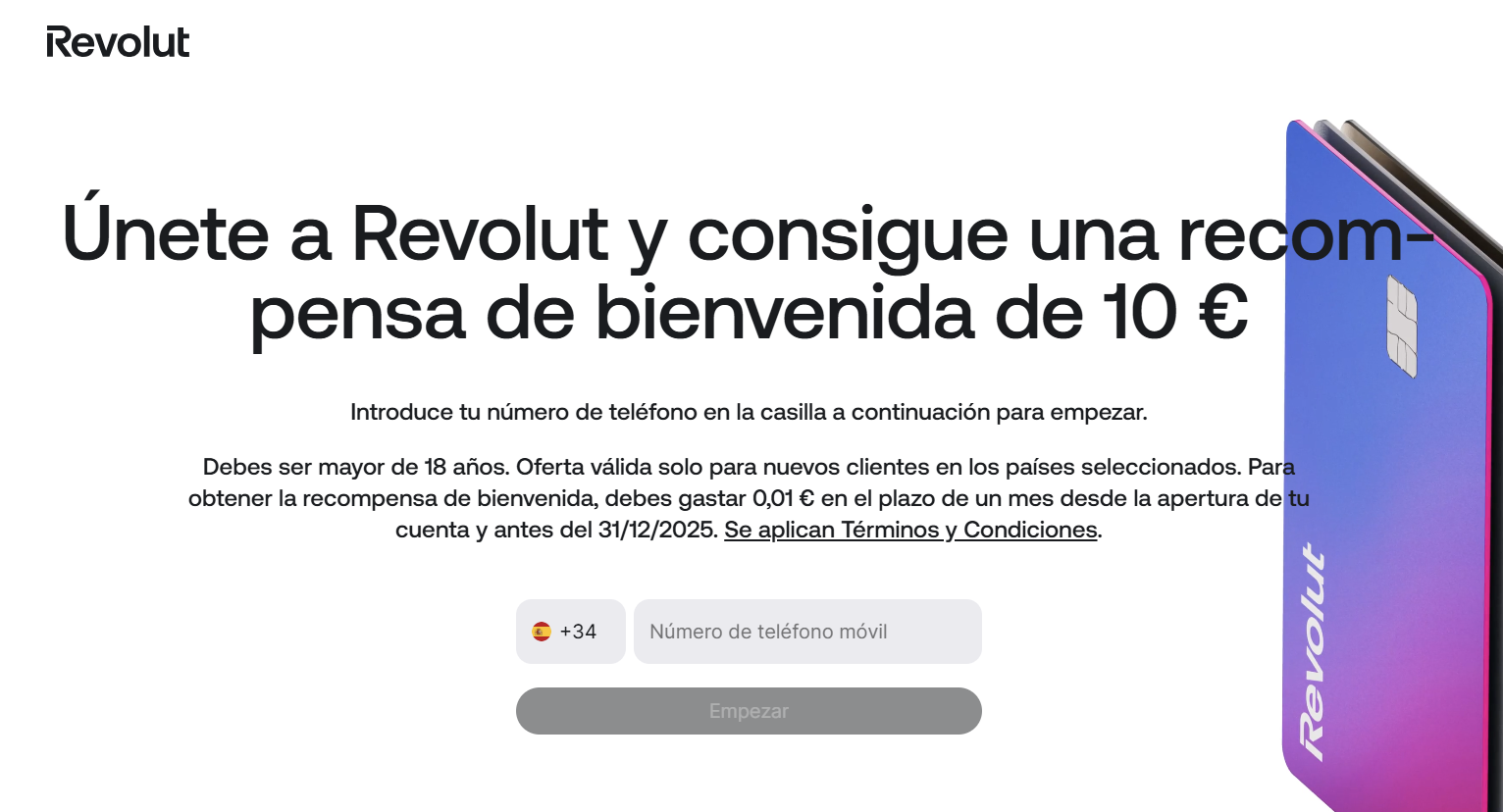

- Revolut - €10-€30 bonus: open an account through the link, verify your identity and complete the required steps (usually a small card spend within the first days or weeks). The amount and conditions depend on your country. See the details in our Revolut welcome bonus article.
- N26 - up to €35 bonus: open an account with a valid promo code and make a first card purchase of at least €5. The amount depends on the plan (€5 on Standard and up to €35 on Metal). See how it works in our N26 promo code article.
Conditions and amounts can change at any time, so always confirm the current campaign before opening an account.
Who is each one for?
Choose Revolut if:
- You want a digital account to use as your main account;
- You live in a country where Revolut offers a local IBAN (or don't mind a Lithuanian one);
- You value higher interest on savings and investing in the same app;
- You want a multi-currency account for frequent travel.
Choose N26 if:
- You're looking for a simple, free account, mainly as a secondary one;
- You pay a lot by card abroad and want zero-markup FX, every day of the week;
- You have ties to Germany or don't mind having a German IBAN;
- You don't depend on domestic-only payment schemes in your country.
What if you use both?
Since both are free to keep, many users end up with both: Revolut as the main account, with a local IBAN (where available), savings and investing, and N26 as the travel card, taking advantage of the zero-markup FX on purchases. It's a combination that takes the best of each at no maintenance cost.
So, which one should you choose?
If you're looking for a digital account for everyday life in Europe, Revolut is the more complete choice: local IBANs in a growing number of countries, better savings rates and integrated investing. It's the one that best replaces a traditional bank account.
N26 remains a solid, very well-built account, but the German IBAN limits it as a main account in several countries. It shines brightest as a secondary account for travel and spending abroad, where the zero-markup FX is a real advantage.
You don't have to choose forever: since both are free, you can open both, test them in your real context and keep the one that fits best - or use each for what it does best. To see how they compare with other options, explore our best online banks in Europe.
This article is for information and educational purposes only and does not constitute financial, investment or tax advice, nor a recommendation. The fees, rates, conditions, plans and coverages mentioned can change at any time and may vary by country - always confirm the current information with each provider. Investing involves risk of capital loss. This article may contain affiliate links: if you open an account through them, we may receive a commission, at no additional cost to you. Our editorial content remains independent.